
Emotional reactions often feel sudden, intense, and difficult to fully explain. A small shift in tone, silence from someone, or a change in connection can quickly trigger overthinking, anxiety, or emotional withdrawal.
These experiences are more common than they appear and are shared by many people in different situations. What seems like an immediate reaction is often something deeper, shaped over time through past experiences and emotional memory. These are not random reactions. They are emotional patterns, deep internal responses influenced by past experiences, stored memories, and learned emotional survival strategies.
What Are Emotional Patterns?
Emotional patterns are repeated ways your mind and body respond to situations that feel familiar. They are not just thoughts. They are:
- Emotional reactions
- Memory-based responses
- Protective instincts
- Learned coping behaviors
For example:
- Overthinking when someone becomes distant
- Feeling anxious when messages are unanswered
- Shutting down during emotional conflict
- Becoming overly attached quickly in relationships
These patterns often feel automatic because they were formed over time, not in a single moment.
Why You React More to Emotions Than Situations?
Most emotional reactions are not about the present moment alone. They are influenced by:
- Past experiences
- Unresolved emotional memories
- Childhood or earlier relationship patterns
- Moments where emotions were not fully processed
This is why two people can experience the same situation but react completely differently. The present moment often acts as a trigger, while the emotional response comes from older experiences stored in the mind.
Why Overthinking and Emotional Triggers Keep Repeating?
If you notice similar emotional reactions showing up in different situations, it is not a coincidence. This repetition often happens because:
- The emotional experience was never fully understood
- The mind is trying to find meaning or closure
- Certain emotional needs are still unprocessed
- Past patterns are still influencing present perception
For example, someone who has experienced inconsistency in relationships may become highly sensitive to silence or delayed responses. The mind is not trying to create problems, it is trying to prevent emotional pain based on past learning.
Common Emotional Patterns People Experience
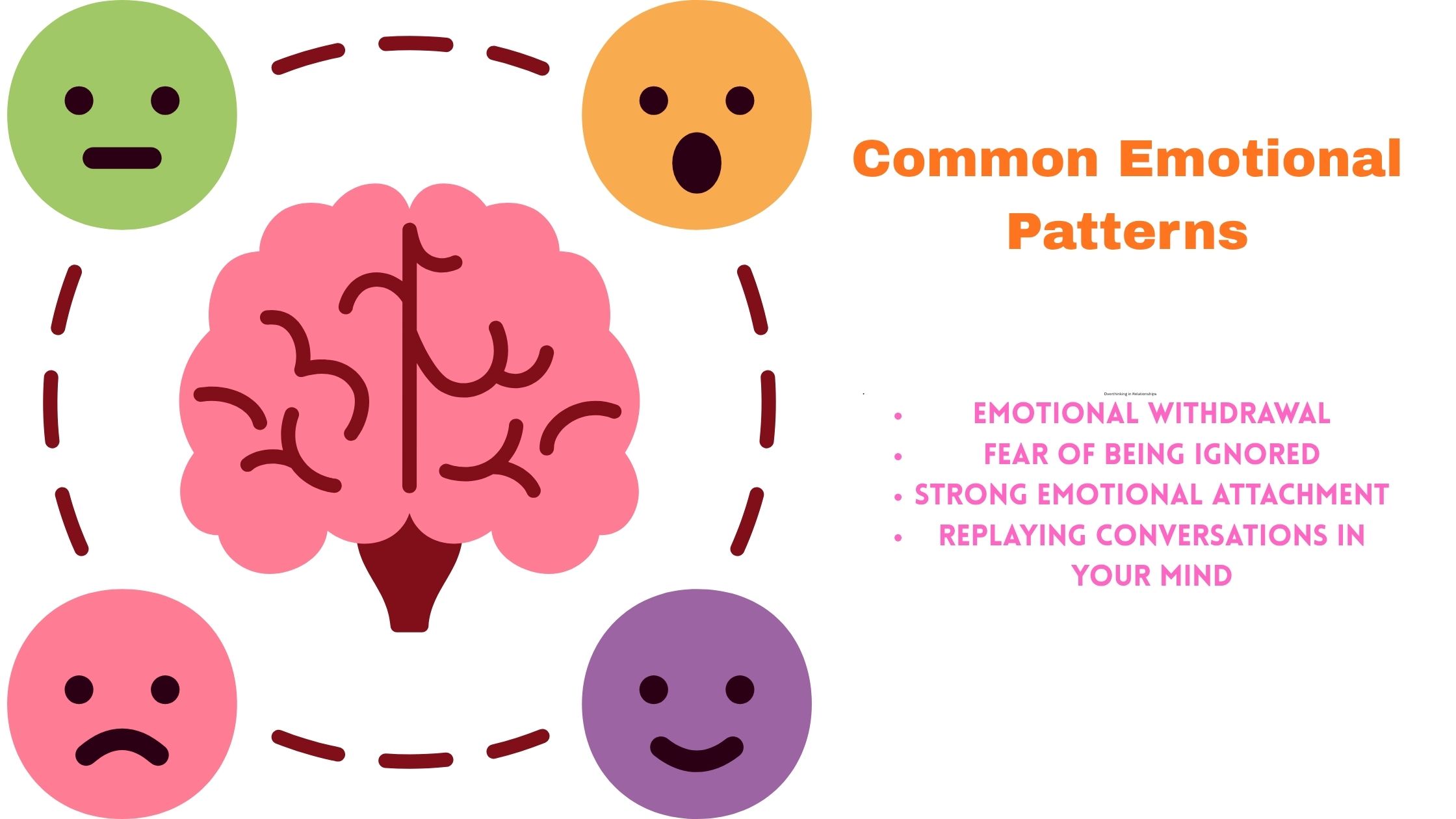
Here are some of the most common emotional patterns many people silently experience:
- Overthinking in Relationships: Interpreting small changes as signs of distance or rejection.
- Emotional Withdrawal: Shutting down when things feel overwhelming or unclear.
- Fear of Being Ignored: Feeling anxious when communication changes, even slightly.
- Strong Emotional Attachment: Feeling deeply connected quickly, sometimes before emotional safety is established.
- Replaying Conversations in Your Mind: Trying to find meaning, clarity, or mistakes after interactions.
These patterns are more common than most people realize.
Emotional Patterns Are Not Personality Flaws
One of the biggest misunderstandings about emotional behavior is assuming it reflects who you are as a person. In reality, emotional patterns are often adaptive responses, meaning they developed to help you cope in certain environments.
For example:
- Overthinking may have developed as a way to stay prepared
- Emotional sensitivity may come from heightened awareness of relationships
- Withdrawal may have developed as a way to protect emotional energy
These are not flaws. They are learned survival mechanisms that no longer serve the same purpose today.
Why Emotional Patterns Feel So Hard to Change?
Emotional patterns are not controlled by logic alone. Even when you understand your behavior, the emotional response can still happen automatically.
This is because:
- Emotional memory is stored deeply in the nervous system
- Reactions often happen before conscious thought
- The mind prioritizes safety over logic
This is why awareness alone does not instantly stop emotional reactions, it simply helps you recognize them more clearly.
You Are Not Your Emotional Reactions
It is important to separate your identity from your emotional responses. You are not:
- Your overthinking
- Your anxiety
- Your emotional triggers
- Your withdrawal patterns
These are experiences you have, not definitions of who you are. At the core, you are the awareness that notices these patterns. And awareness creates space between thoughts for change over time.
Final Verdict: Understanding Yourself Changes Everything
Emotional patterns are not problems to be erased, they are signals shaped by experience, memory, and adaptation. Patterns such as overthinking, emotional triggers, and emotional reactions often develop as protective responses, even when they later appear as anxiety triggers or relationship anxiety in everyday life.
With clearer understanding, these patterns begin to feel less overwhelming and less automatic. Instead of reacting instantly, there is more space to notice what is happening internally. This awareness supports emotional healing by bringing attention to underlying responses rather than just surface reactions. Over time, self-awareness helps in understanding emotional sensitivity more clearly, allowing for more balanced and steady emotional experiences without being controlled by repeating patterns.